

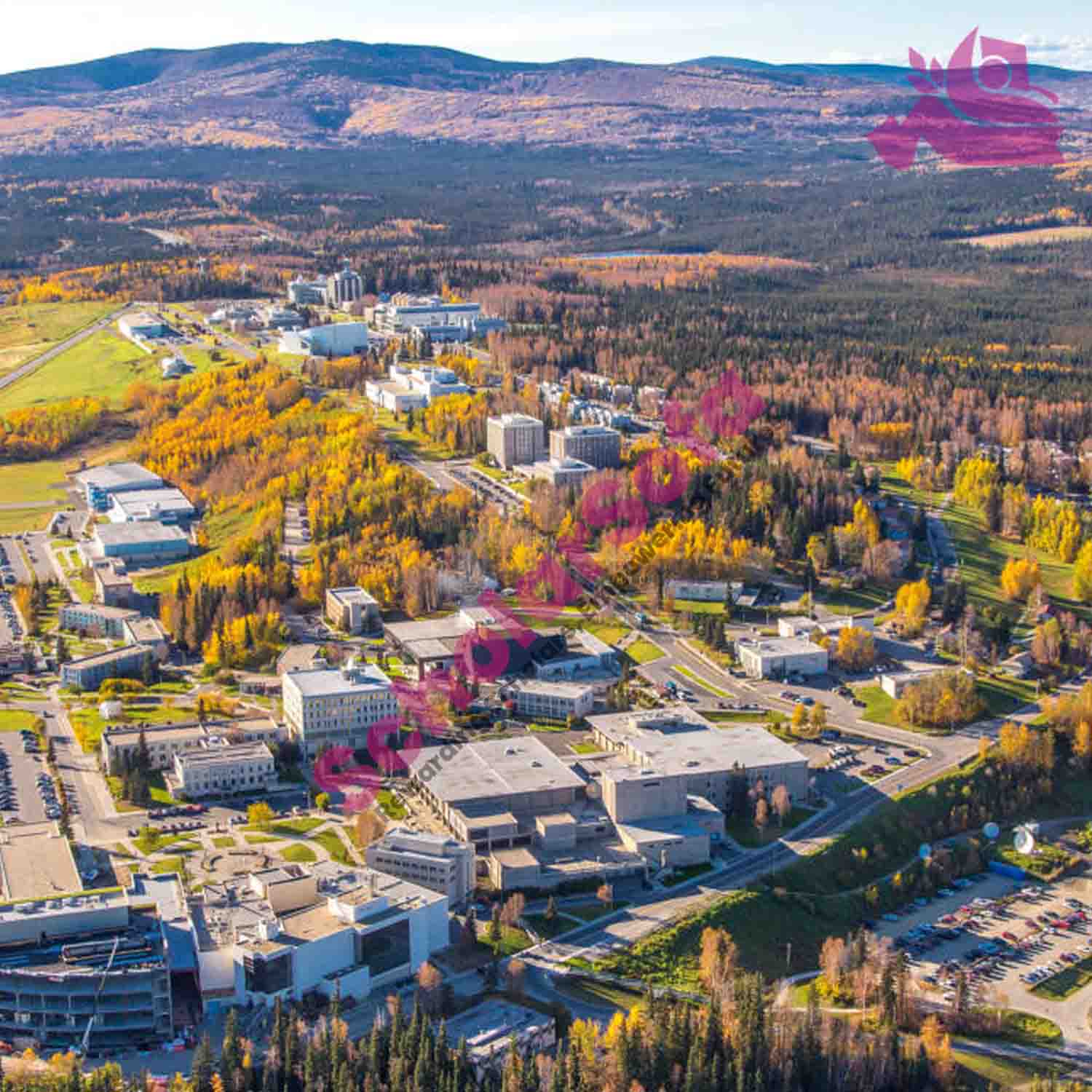
PhD opportunities in fluid mechanics at the UAF with Dr. Harshit Mishra offer fully funded positions in cutting-edge research. These roles focus on hydraulics and civil engineering applications, ideal for aspiring researchers.
Why Pursue a PhD at the University of Alaska Fairbanks?
University of Alaska Fairbanks (UAF) stands out for its unique research environment in fluid mechanics, leveraging Alaska’s extreme conditions for innovative studies in hydraulics and ocean engineering. Dr. Harshit Mishra, joining the Department of Civil, Geological, and Environmental Engineering in Fall 2026, brings expertise from Texas A&M University in turbulent flows and free-shear flows. Fully funded PhD positions emphasize practical applications, preparing students for industry and academia.
UAF’s location enables real-world research on frozen reservoirs, fluvial hydraulics, and environmental fluid dynamics, distinct from mainland programs. The program’s interdisciplinary approach integrates civil engineering with petroleum and environmental sciences.
2 Funded PhD Position in Fluid Mechanics at the University of Alaska Fairbanks
Dr. Harshit Mishra’s Background
Dr. Harshit Mishra serves as a postdoctoral researcher at Texas A&M’s Zachry Department of Civil and Environmental Engineering, mentored by Prof. Scott Socolofsky. His work centres on turbulent flows applied to hydraulics and ocean engineering, including a novel scaling framework for smooth wall-bounded turbulent flows presented at the 2025 Division of Fluid Dynamics Annual Meeting. Mishra holds memberships in IAHR committees on Fluid Mechanics, Experimental Methods, Fluvial Hydraulics, and Hydraulic Structures.
Transitioning to UAF in Fall 2026, he seeks 1-2 PhD students for collaborative projects once funding aligns. His research bridges theory and application, ideal for students interested in scalable fluid models.
Fluid Mechanics Research at UAF
UAF excels in fluid mechanics tied to Alaska’s challenges, including reservoir characterization, rock/fluid properties in frozen environments, and drilling fluid optimisation. Civil engineering research explores fluvial reservoirs, CO₂ sequestration, and gas hydrates, with tools like core flooding systems for low-salinity flooding. Mechanical engineering faculty study nanofluid heat transfer and turbulent boundary layers.
PhD programs like Engineering PhD (concentrations in Civil, Mechanical, and Environmental) support fluid-focused theses with 18 thesis credits and comprehensive exams. Opportunities span space physics, fluids, and petroleum engineering.
Details of the Funded PhD at the University of Alaska Fairbanks
Two fully funded PhD positions are available in fluid mechanics under Dr Mishra at UAF, starting as funding becomes available post-Fall 2026. Focus areas include fluid mechanics and hydraulics in civil engineering, with emphasis on short-form interest submissions. Funding covers tuition, stipend, and research costs, common in UAF’s engineering PhDs.
Positions prioritize candidates ready for graduate-level work; the admissions committee reviews applications. Expect collaboration on turbulent flow modelling and experimental hydraulics.
Key Research Areas in Fluid Mechanics
- Turbulent flows and scaling frameworks for wall-bounded systems.
- Free-shear flows in ocean and hydraulic engineering.
- Nanofluid properties (e.g., SiO₂ in ethylene glycol-water) for heat transfer.
- Frozen reservoir permeability and heavy oil flow assurance.
- Hydraulic turbine fluid mechanics and experimental instrumentation.
These align with UAF’s strengths in extreme-environment fluids.
Benefits of Studying at UAF
UAF offers a PhD in Engineering with Arctic/Civil concentrations, fostering expertise in cold-climate fluids. Students gain access to advanced labs for core flooding, PVT analysis, and formation damage evaluation. The remote setting builds resilience and unique publications, boosting career prospects in the energy and environmental sectors.
Graduates develop skills in problem analysis, original research, and teaching. Networking via IAHR and industry ties enhances employability.
Application Requirements
University of Alaska Fairbanks PhD admissions require a completed graduate application, transcripts, GRE (if specified), letters of recommendation, and a statement of purpose. For Dr. Mishra’s positions, submit the short interest form first; he will reach out based on the admissions committee’s approval. International applicants need TOEFL/IELTS scores.
Deadlines align with UAF’s graduate cycles; funding availability drives selections. Highlight fluid mechanics experience, hydraulics interest, and civil engineering alignment.
Apply Here

Ready to join a fully funded PhD research in fluid mechanics? Fill out Dr Harshit Mishra’s short interest form HERE. The admissions committee will review, and Dr Mishra will contact promising candidates. Apply now to secure your spot at UAF!
Career Prospects After a PhD graduate
UAF fluid mechanics PhDs enter academia, the petroleum industry, or environmental consulting, leveraging Alaska expertise. Skills in turbulent modelling and experimental hydraulics suit roles at ExxonMobil, national labs, or universities. Alumni publish in top journals and lead projects on sustainable energy.
Demand for Arctic fluid specialists grows with climate and energy transitions.
FAQ: Funded PhD Position in Fluid Mechanics at UAF
1. What is this PhD position about?
This is a funded PhD position in fluid mechanics and hydraulics with applications in civil engineering at the University of Alaska Fairbanks (UAF). The successful candidate will work under the supervision of Dr. Harshit Mishra on research topics such as turbulent flows, hydraulic structures, and environmental or civil engineering fluid systems.
2. Who is supervising this PhD position?
The position will be supervised by Dr. Harshit Mishra, who is joining the University of Alaska Fairbanks and has a background in fluid mechanics, hydraulics, and turbulent flow research.
3. How many PhD positions are available?
Dr. Mishra expects to hire 1–2 PhD candidates once appropriate funding becomes available.
4. Is this PhD position fully funded?
Yes. The intention is to offer funded PhD positions, typically including a stipend and tuition support, subject to funding availability and the university’s regulations.
Sustainable Crop Protection & Bio‑Based Materials: 8 Funded PhD
5. What is the main research focus?
The research centers on fluid mechanics and hydraulics with civil engineering applications. This may include turbulent flows, environmental and hydraulic systems, and related experimental or computational studies, depending on ongoing projects and funding.
6. Which department will the PhD candidate join?
The successful candidates will join a department within UAF that focuses on civil or closely related engineering disciplines (such as civil, environmental, or mechanical engineering), aligned with Dr. Mishra’s research.
7. What are the minimum academic requirements?
Applicants are generally expected to hold a strong Bachelor’s or Master’s degree in civil engineering, mechanical engineering, environmental engineering, or a closely related field, with solid foundations in fluid mechanics and mathematics.
8. Do I need research experience in fluid mechanics before applying for admission into UAF?
Prior research experience in fluid mechanics, hydraulics, CFD, or related areas is highly advantageous and will strengthen your application, though motivated candidates with strong fundamentals may also be considered.
9. Are international students eligible to apply?
Yes. International applicants are welcome, provided they meet UAF’s admission and English-language requirements (such as TOEFL/IELTS or equivalent, as specified by the university).
10. When does the PhD program start?
The start date will typically align with an upcoming intake (e.g., Fall semester) and is dependent on when funding is finalized and the formal admission process is completed.
11. How do I apply for this PhD position?
Interested candidates must first fill out the short “Interest for PhD at UAF” form shared by Dr. Mishra. After reviewing your response, he may contact you with further instructions to proceed with the official UAF graduate application.
12. Where can I find the link to apply?
You can find the application link in the “Apply Here” section of the blog post. Make sure to follow that link, complete the form carefully, and double-check your contact details and academic background.
13. What documents should I prepare?
Typically, you should be ready with:
- Curriculum vitae (CV)
- Academic transcripts
- Statement of purpose or research statement
- Contact details for referees (for recommendation letters)
- English language test scores (if required by UAF)
Exact document requirements will be clarified when you receive official application instructions from UAF.
14. Is the short interest form the same as the official university application?
No. The short form is an initial expression of interest for Dr. Mishra to identify suitable candidates. Final admission is subject to submitting a full graduate application and meeting all UAF requirements.
15. How competitive is this PhD position in UAF?
Because there are only 1–2 funded positions and the research area is specialised, the selection is competitive. Strong academic records, relevant research experience, and a clear motivation for fluid mechanics and hydraulics will significantly improve your chances.
16. What skills will I gain during this PhD?
You will develop advanced skills in:
- Fluid mechanics and turbulence modeling
- Experimental or computational hydraulics
- Scientific programming and data analysis
- Academic writing, publishing, and presenting
- Problem-solving in complex civil engineering systems
17. Are there teaching or outreach opportunities?
Depending on department needs and funding structure, you may have opportunities to serve as a teaching or research assistant, helping with labs, tutorials, or research projects, which will further develop your academic and communication skills.
18. Can I work on my own research ideas?
Yes, within the broader scope of Dr. Mishra’s research program and funding, there is usually flexibility to refine or propose specific topics that align with your interests and the group’s expertise.
19. What are the career prospects after graduation?
Graduates can pursue careers as university academics, research scientists, or engineers in sectors such as water resources, environmental consulting, energy, offshore and coastal engineering, and R&D-intensive industries that rely on fluid mechanics.
20. Who should I contact if I have more questions about the position at UAF?
For position-specific questions, you should use the contact options provided in the interest form or on Dr. Mishra’s professional profile. For general admission or visa-related queries, you should refer to the University of Alaska Fairbanks graduate admissions office




Digital Twins Fully Funded PhD: 1 Open Position at Virginia Tech
[…] is a fully funded PhD graduate assistant role in the Myers-Lawson School of Construction at Virginia Tech, starting in […]