

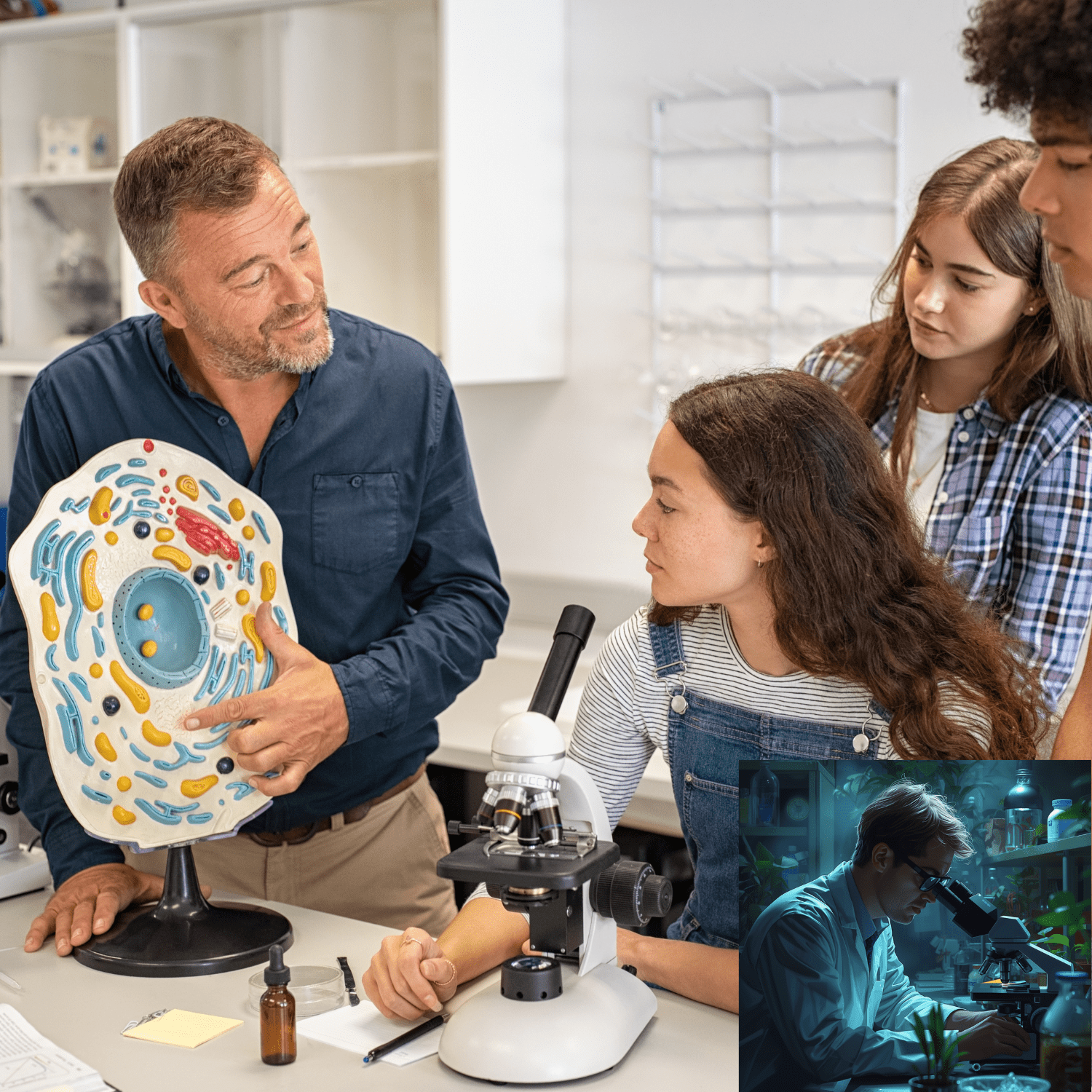
Do you have a passion for plant cell biology, membrane trafficking, and unravelling the molecular processes behind plant survival? A great postdoc position in plant cell biology is now available at Van Damme and Dagdas Labs for those who are interested in exploring the relationship between endocytosis and autophagy in Arabidopsis thaliana.
This collaborative FWO-DFG project provides an excellent chance for a highly motivated scientist to combine his/her research interests in cell biology, proteomics, and plant molecular biology.
Research Focus: How Endocytosis and Autophagy Shape Plant Survival
This project seeks to unravel the relationship between endocytosis and autophagy as well as their role in determining plant growth and survival. The scientists noted that when an endocytic mutant is coupled with an autophagic mutant, there is a pronounced growth delay in plants in non-stressful environments. This is a fascinating result and provides a basis for further exploration into the mechanisms of plant biology.
The candidate for the postdoc in plant cell biology will be able to employ the following methods:
- Interaction proteomics
- Live-cell imaging
- Protein biochemistry
- Mutant analysis
Since this is an interdisciplinary research effort, the postdoctoral fellow will take advantage of the synergistic strengths found within both labs.
Who Should Apply?
The role is perfect for driven scientists with a thirst for research and excitement for plant molecular biology.
Candidates are required to have:
- A PhD in Biotechnology, Biochemistry, Biology, Bioengineering, or a related field
- Proven expertise through publications or preprints in:
- Arabidopsis live-cell imaging
- Cloning techniques such as Golden Gate or Gibson assembly
- Protein biochemistry
- Interaction proteomics
Having experience in mentoring Master’s or PhD students will be an asset.
The group is seeking candidates who are:
- Independent and proactive
- Collaborative and team-oriented
- Strong critical thinkers
- Excellent communicators in English
- Capable of planning and executing research projects with precision
Scientists who would like to apply for individual grants like FWO, Marie Curie, and EMBO fellowships are most welcome to apply.
What the Position Offers
Participating in this project will be joining a very lively and well-established research community.
Some advantages of being the chosen applicant include:
- A state-of-the-art laboratory environment
- A dynamic and inclusive research team
- Access to cutting-edge technologies
- Training opportunities in technical, academic, and career-oriented skills
- Diverse collaborations and scientific networking opportunities
- An initial one-year contract extendable up to three years
The earliest available start date will be considered.
KTH Postdoc: 1 funded Position in Biobased Battery Separators
About the Van Damme Lab and VIB-UGent PSB
The research position is based at the VIB-UGent Center for Plant Systems Biology (PSB), Ghent, Belgium, which is one of the leading research centers in the area of plant biology.
Van Damme Laboratory research concentrates on plant membrane traffic, utilizing the combination of cell biology, biochemistry, and structural biology to gain insights into the complex mechanisms that govern the regulation of the plasma membrane proteome and endocytosis.
The center offers a unique scientific environment within the well-known Plant Biotech campus.
Learn more about the institute via VIB-UGent Center for Plant Systems Biology
You can also explore the lab’s research activities at Van Damme Lab
How to Apply for Postdoc in Plant Cell Biology
Interested candidates must submit their application through the official VIB online application platform:

The application package (single PDF in English) should include:
- A one-page summary of research experience and future goals
- A one-page motivation letter focused on future research interests
- A detailed CV including publication list
- Contact information for 2–3 references
The applications will be assessed on a continuous basis, with shortlisted candidates being invited for interviews. This post will be advertised until the right person is found.
For further details, interested applicants can reach out to Daniel Van Damme by email.
Final Thoughts for Postdoc in Plant Cell Biology
For all those researchers who have a passion for contributing to some groundbreaking findings in the field of plant cell biology and trafficking of endomembranes, here comes a great chance to participate in this unique research program where you can benefit from advanced technologies and a conducive research atmosphere.
Please do forward this opportunity to all the researchers you think would be interested in pushing the frontiers of plant molecular biology.
Postdoc in Plant Cell Biology FAQ
1. What is the main focus of this postdoctoral project?
The aim of this study is to understand how endocytosis and autophagy pathways influence each other in Arabidopsis thaliana and their role in survival, growth, and cell organization.
2. Which laboratories are involved in this project?
This is an interdisciplinary project between Van Damme Laboratory and Dagdas Laboratory under FWO-DFG research cooperation project.
3. Where is the position based?
The Postdoc in Plant Cell Biology is located at the VIB-UGent Center for Plant Systems Biology (PSB), Ghent, Belgium.
4. What research techniques will the postdoctoral fellow use?
This project requires use of several state-of-the-art technologies, namely:
- Live-cell imaging
- Interaction proteomics
- Protein biochemistry
- Mutant analysis
- Molecular cloning methods such as Golden Gate and Gibson assembly
5. What qualifications are required?
Candidates must possess a PhD degree in Biotechnology, Biology, Biochemistry, Bio-engineering, or any other relevant field. The applicants should have knowledge of plant molecular biology and associated methodologies.
6. Is prior experience with Arabidopsis required?
Yes. Previous experience in live-cell imaging of Arabidopsis and plant molecular biology is viewed as a critical prerequisite for this position.
7. Are international applicants encouraged to apply?
Yes. Researchers across the globe who qualify for the position will be warmly welcomed to apply.
8. What qualities are the labs looking for in a candidate?
The ideal candidate must be:
- Scientifically curious
- Independent and proactive
- Collaborative
- Skilled in critical thinking
- Proficient in written and spoken English
- Capable of planning and executing experiments independently
9. How long is the postdoctoral contract?
The term of the first appointment is for one year and may be extended for up to three years subject to satisfactory performance and progress.
10. Are fellowship applications encouraged?
Yes. Candidates who would like to apply for fellowship positions such as FWO, Marie Curie, or EMBO fellowships are highly recommended to do so.
11. What documents are required for the application?
Applicants are required to provide:
- A one-page summary of research experience and future goals
- A one-page motivation letter
- A detailed CV including publications
- Contact information for 2–3 references
12. How should the motivation letter be written?
The motivational letter should concentrate on future objectives and what the applicant aims to achieve through the position, as opposed to highlighting their past successes.
13. When does the application review process begin?
Applications will be processed on a rolling basis, starting right after submission.
14. Is there an application deadline?
This posting will stay open until we find an appropriate candidate for the position.
15. Who can applicants contact for additional information?
For questions about this posting, please contact Daniel Van Damme using the information in the job posting.
16. Why is this project significant in plant biology?
The study of the interaction between endocytosis and autophagy might uncover whole new ways to control the regulation of plant development and stress response.

Leave a Reply