

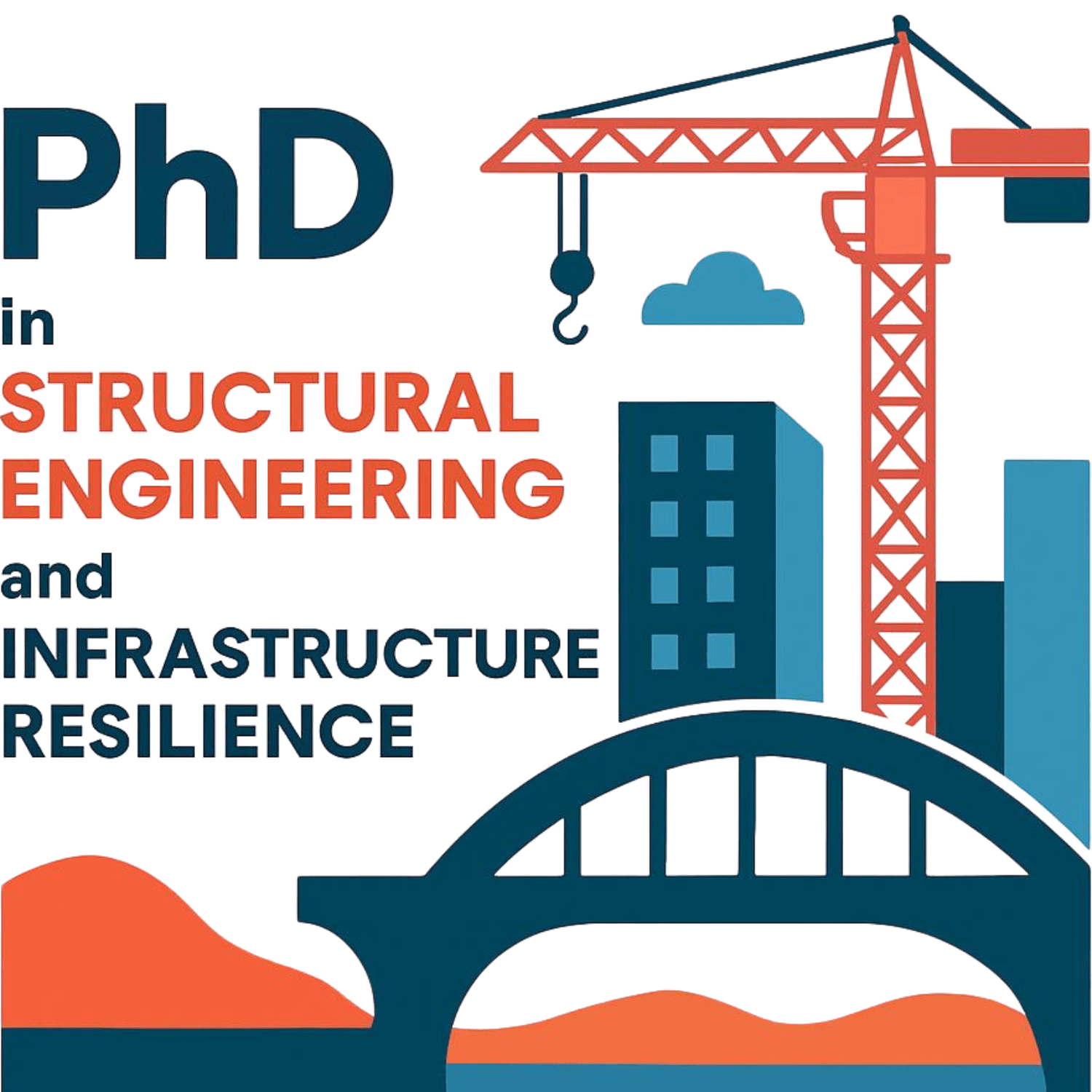
Looking for a PhD in structural engineering, advanced manufacturing, and real-world impact? Here’s a unique chance to work on next-generation solutions for infrastructure resilience at the University of Massachusetts. Aging infrastructure has become an issue worldwide. Whether it is corroding steel bridges or buildings that cannot handle severe loading conditions, it has never been more important to explore more intelligent engineering designs to tackle the problem. With the development of material science and advanced manufacturing technology, such problems can be solved from a different perspective.
There is a research position open to prospective candidates interested in PhD in Structural Engineering, advanced manufacturing, and infrastructure resilience at UMass.
PhD in Structural Engineering Research Areas
Architected Materials for Civil Infrastructure
In this study, we investigate the design and fabrication of architected materials, such as lattice and auxetic structures that have engineered properties. These materials differ from ordinary materials in the sense that they can be designed to perform better than ordinary materials using micro- or meso-level design.
Areas of interest include:
- Design of lattice and auxetics to improve energy absorption
- Improve structural efficiency and loading capacity
- Increase the durability and resistance to mechanical failure
Auxetic materials (negative Poisson’s ratio) can expand when stretched, which increases their fracture resistance and provides excellent protection against impact.
Repair and Inspection of Steel Bridges
Steel bridges across the globe are being plagued by corrosion, fatigue cracking, and section loss. Conventional methods of repair have been shown to be relatively expensive and inefficient.
This study seeks to develop repair methods through the use of additive manufacturing.
Some of the goals include:
- Reconstruction of deteriorated steel structures using modern manufacturing methods
- Increasing the longevity of old bridges
- Decreasing repair costs and downtime
Visualize an old, corroded steel bridge beam being repaired by adding material in precise locations without having to replace the whole structure.
What You’ll Work On
In your role as a PhD student, you will undertake a range of research activities that include the following:
- Design and fabrication of architected material systems
- Testing the mechanical and structural performance of the system
- Modeling and simulation of the material and structural response
- Study of additive repair for practical application in infrastructure
- Interdisciplinary work involving materials science and civil engineering
Ideal Candidate Profile for PhD in Structural Engineering
This opportunity is suited for candidates with a strong interest in interdisciplinary research.
Preferred background:
-
Civil engineering
-
Materials science
-
Mechanical engineering
Desirable skills and interests:
-
Structural analysis or solid mechanics
-
Materials characterization and testing
-
Interest in additive manufacturing or advanced fabrication
-
Curiosity and motivation to solve real-world engineering challenges
Why PhD in Structural Engineering Matters
This PhD program does not just confine itself to academic curiosity but is directly involved in addressing important infrastructural problems, such as the following:
- Enhancing the safety and resiliency of civil infrastructure systems
- Minimizing the environmental and financial cost of maintaining infrastructures
- Promoting smarter material and manufacturing technology in civil infrastructures
People with such qualifications will find themselves perfectly suited for a career in academia and industry, particularly in infrastructure, materials development, and advanced manufacturing sectors.
Apply PhD in Structural Engineering Here
Interested candidates are encouraged to reach out directly to learn more about the position and application process.
📩 Contact: [email protected]
You may include:
-
Your CV
-
A brief statement of research interests
-
Any relevant experience or publications
Frequently Asked Questions (FAQ)
1. Do I need prior experience in additive manufacturing to apply?
No, experience with additive manufacturing is not necessary. But certainly an enthusiasm for acquiring new knowledge about fabrication methods and their use in civil infrastructures will be advantageous.
2. What academic background is suitable for this PhD position?
Applicants with experience in civil engineering, materials science, or mechanical engineering will be preferred. Other fields with applicable experience may be considered as well.
3. Is this a fully funded PhD position?
No information about funding has been provided with the advertisement. Contacting the advisor directly for more information on whether funding is available, including stipends, tuition coverage, and research support, is advisable.
4. What kind of research methods will I be using?
Experimental testing, modeling, and materials design, especially architected materials and additive repair methods, will most probably be required as part of the research program.
5. Can international students apply?
Yes, international students are usually allowed to pursue PhD in structural engineering at U.S. universities. It is necessary to consult the supervisor about the visa and application process.
6. What are architected or auxetic materials?
Architectural materials refer to structured materials with geometrical patterns within them, such as a lattice structure. Auxetics are a particular type of material that expands in the lateral direction when stretched.
7. What career opportunities can this PhD lead to?
The graduates could seek employment as an academic, engineer for civil infrastructure, an engineer for advanced manufacturing, a scientist researching new materials, or researcher for sustainability/resilience.
8. How should I contact the supervisor?
Interested candidates could send their CVs, along with a statement of research interest and related background or publications, to [email protected].
9. Is prior research experience required?
Not always required, but beneficial, is previous research experience (thesis work, publications, laboratory experience), which will enhance your profile.
10. What makes this PhD opportunity unique?
This position encompasses structural engineering, materials science, and advanced manufacturing, enabling you to tackle actual infrastructure problems through innovation and interdisciplinary collaboration.




Leave a Reply