

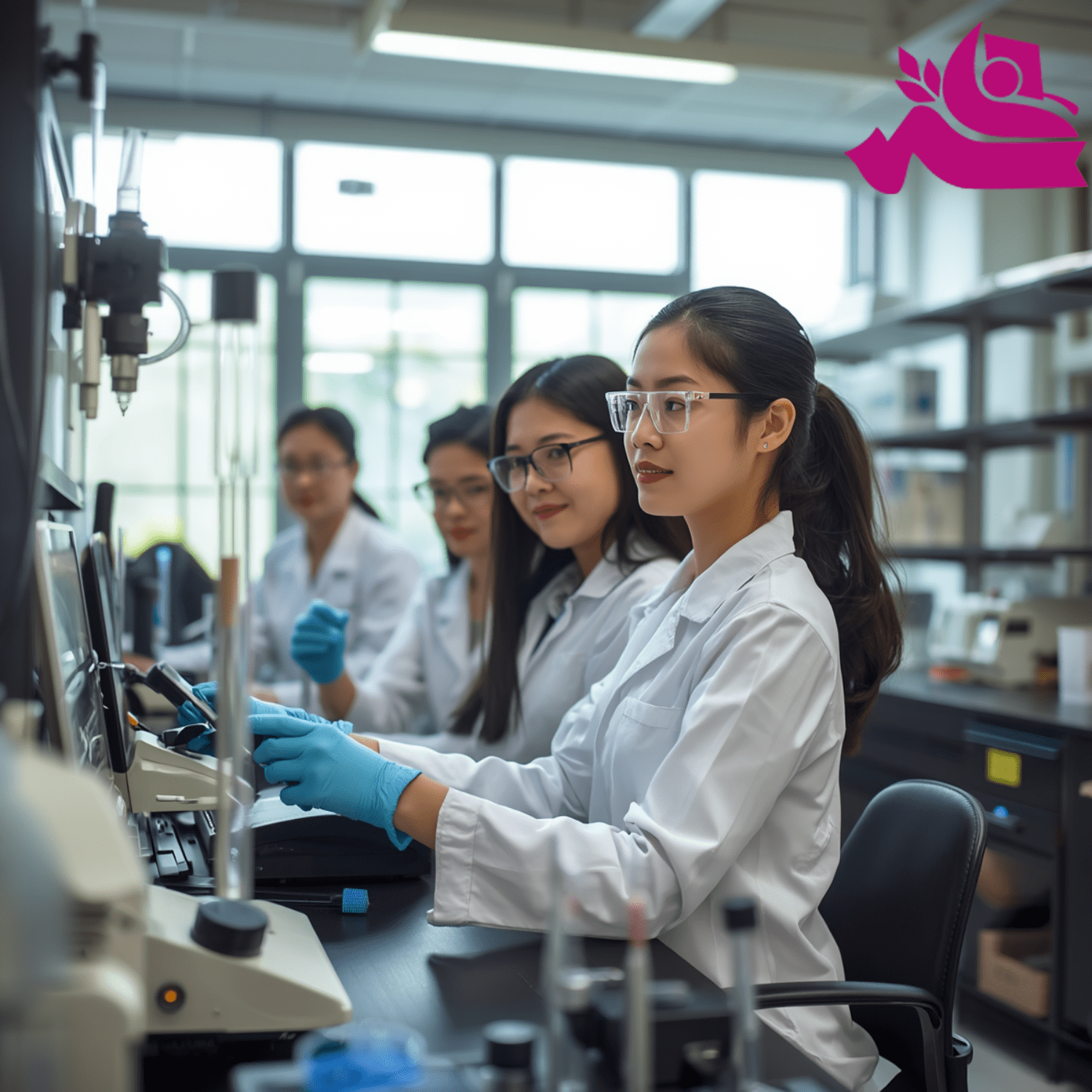
Universiti Tun Hussein Onn Malaysia (UTHM) is looking for MSc and PhD students interested in doing research work in the area of wastewater treatment and catalysis. This research program suits perfectly the candidates who wish to make their mark in clean technology research and establish themselves as researchers in environmental sciences and engineering.
Applications are invited for postgraduate programs (MSc & PhD) at the UTHM campus in Pagoh, Johor, Malaysia. Interested applicants should submit their applications immediately.
About UTHM and the research supervisor
UTHM is a public university located in Malaysia, which is renowned for its emphasis on the fields of engineering, technology, and applied sciences. The Pagoh campus is one location where students can concentrate solely on postgraduate studies, which are conducted under optimal conditions.
The above-mentioned positions are under the supervision of ChM. Dr. Syazwan Hanani Binti Meriam Suhaimy of the Department of Physics and Chemistry, Faculty of Applied Sciences and Technology. Dr. Syazwan specializes in such areas as catalysis, environmental applications, and wastewater treatment.
MSc and PhD research titles and focus
Research Title: Development of Catalyst for Pollutant Removal in Wastewater Treatment Application
This particular research involves the design and development of an effective catalyst for removing contaminants in wastewater. In this regard, as a postgraduate student, you will be responsible for various activities such as synthesis and characterization of catalysts.
This specific research project is geared towards solving practical environmental problems, like the removal of toxic or refractory pollutants present in industrial or municipal wastewaters. Being part of this group, you will get practical insights into the field of material science and water treatment technology.
Who should apply for the MSc and PhD?
This position is available for any motivated individuals from both local and international settings, provided that the below conditions are fulfilled:
-
Bachelor’s degree in a related engineering or science field (for MSc applicants).
-
Master’s degree in a related field (for PhD applicants).
-
Minimum CGPA of 3.00 and above or equivalent academic standing.
-
Good English communication skills, both written and spoken.
-
Passionate about research, able to work independently, and committed to completing a postgraduate degree.
The best candidate for this position would be someone interested or experienced in environmental engineering, chemistry, chemical engineering, materials science, or similar fields. Prior knowledge on catalysis, wastewater treatment, or laboratory experiments would be beneficial, but high motivation is equally essential.
MSc and PhD Benefits
Through participating in this research study at UTHM, you will be able to gain access to:
-
Opportunities to publish research articles in reputable journals and present your work at national and international conferences.
-
A supportive and collaborative research environment, with guidance from experienced academic staff and access to research facilities.
-
The chance to develop practical skills in experimental design, data analysis, scientific writing, and presentation.
-
Preparation for diverse career paths, including academia, research institutes, environmental agencies, water treatment companies, and consulting.
Financial assistance may be available contingent upon research funds and institutional policy; however, it is normally awarded on an eligibility basis. Prospective participants may consult with their supervisors regarding potential financial assistance through the application process.
Quick overview of the opportunity
PhD in Electrochemical Purification of LIB Waste at TU Delft 2026
How to apply
Interested candidates should send an email expressing their interest to:
Email: [email protected]
To help the supervisor assess your suitability, please include:
-
Your updated CV or resume.
-
Academic transcripts (Bachelor’s and, if applicable, Master’s).
-
A brief statement of research interest (200–300 words) outlining your background, motivation, and how your interests align with wastewater treatment and catalyst development.
You may use the subject line “Application for MSc/PhD Position – Wastewater Catalyst Project.”
The applications will be processed on a first-come, first-served basis until all the vacancies are taken up.
Regulatory Science Online MSc Full Scholarship for Fall 2026
Frequently Asked Questions (FAQ)
1. Who is eligible to apply for these positions?
The candidate must possess a bachelor’s degree in a field related to science and engineering for an MSc program, and a master’s degree in a field relevant to the PhD program. The candidate must also score a CGPA of at least 3.00 (equivalent).
2. Are international students welcome to apply?
Yes. International applicants are welcome to apply if they satisfy the admission requirements and comply with the visa regulations for students from Malaysia.
3. What is the main focus of the research project?
This research centers on developing catalysts and their evaluation to degrade contaminants present in wastewaters through the use of wastewater treatment processes. The research involves material synthesis and characterization for performance evaluation in wastewaters.
4. Where will the research be conducted?
The study will take place at the University Tun Hussein Onn Malaysia, Pagoh campus, Johor, Malaysia through the Faculty of Applied Science and Technology.
5. Who will supervise the MSc/PhD students?
The students will be supervised by ChM. Dr. Syazwan Hanani Binti Meriam Suhaimy from the Department of Physics and Chemistry, Faculty of Applied Science and Technology.
6. What type of degree will I be enrolled in?
This is research-oriented MSc and PhD course, which implies that there is going to be a lot of research conducted under the guidance of the advisor.
7. Is funding or scholarship support available?
Depending on research grant funding at present, funding opportunities might arise. Candidates who are being considered for admission can discuss scholarship/assistantship possibilities with the advisor.
8. What documents should I include in my application email?
You should include an updated CV, academic transcripts (Bachelor’s and, if applicable, Master’s), and a short statement of research interest (around 200–300 words).
9. How should I contact the supervisor to apply?
E-mail @ [email protected], attaching your files in the message titled, “Application for MSc/PhD Position – Wastewater Catalyst Project”.
10. Is there an application deadline?
Currently, the application process is ongoing, and the applications are being reviewed on a rolling basis until all vacancies are filled. Early submission is advised.
11. What is the expected duration of the program?
A full-time MSc program usually requires 2–3 years for completion, whereas a full-time PhD program typically lasts 3–4 years.
12. What kind of background will strengthen my application?
Qualifications in environmental engineering, chemistry, chemical engineering, materials science, or a relevant field are an advantage. Experience in any of these areas, particularly catalysis, wastewater treatment, and lab research, would greatly enhance your application.
13. What career paths can this research lead to?
Graduates can have careers in academics and research institutions, as well as in the industries of water and wastewater treatment, environmental consultancy, governmental departments, and technological firms.
14. Is proficiency in Malay required?
No, Malay is not required for entry into this course. Nonetheless, students must be proficient in English as it will be the primary language used in research and supervision.
15. Can I study part-time?
Flexible part-time programs could also be available based on the policy of the university and approval of your supervisor. This should be noted by applicants to the program before contacting the supervisor.


Leave a Reply