


Explore PhD in Power opportunities at the University of Houston for Spring 2027, focusing on grid resilience, microgrids, and power systems. They are looking for enthusiastic individuals interested in pursuing a PhD in electrical engineering at the University of Houston (UH). Applications will be considered for joining in 2027, but candidates who can join in spring 2027 are preferred.
Selected candidates will be able to work in the Renewable Power Grid (RPG) Lab, headed by Dr. Xingpeng Li, who is an associate professor in the Department of Electrical and Computer Engineering at UH.
Power PhD Research Areas
Some of the topics that prospective PhD candidates can pursue are as follows:
- Power system planning, operations, controls, and optimization
- Artificial intelligence and machine learning for power systems
- Integration of data centers into electric power grids
- Power system reliability, stability, and resilience
- Microgrids and distributed energy resources
- Integration of renewable energy
- Energy storage and battery degradation models
- Data-driven grid monitoring, prediction, and decision-making
Areas that have been researched by the RPG lab include machine learning and optimization in power and energy systems, power system planning and operations, integration of renewables, microgrid sizing and energy management, distributed energy resources, demand response, and energy storage. Some research projects from the RPG lab include grid inertia estimation using machine learning algorithms, security-constrained unit commitment in low-inertia power grids, and machine learning-based load forecasting.
More information about the group, research projects, publications, open-source codes, and current members is available on the RPG Lab website.
Candidate Profile for PhD in Power
Prospective students who have a good grounding in the subject matter are invited to apply in the following fields:
-
Electrical Engineering or Power Engineering
-
Power system analysis, planning, operation, stability, or control
-
Mathematical Programming & Optimization
-
Artificial Intelligence, Machine Learning, or Data Science
-
Applied Mathematics, Operations Research, Computer Engineering, or Other Related Fields
The ideal applicant should show good analysis and problem-solving skills, research skills, and ability to work both independently and in a group.
Previous experience in any of the following fields would be an asset:
- Programming with Python, MATLAB, Julia, C, or C++
- Mathematical modelling using AMPL, GAMS, Pyomo, or other software
- Optimization solvers like Gurobi, CPLEX, or Mosek
- Power systems simulators like PSS/E, PowerWorld, PSCAD, or MATPOWER
- Machine learning libraries like PyTorch, TensorFlow, or scikit-learn
- Writing papers, technical presentations, or scientific publications
The UH ECE program evaluates applications for admission to its PhD program from individuals holding either a bachelor’s or master’s degree in electrical or computer engineering or another highly related discipline. From its experience, the department states that most admitted PhD students achieve a GPA of at least 3.3 out of 4, without setting a minimum requirement.
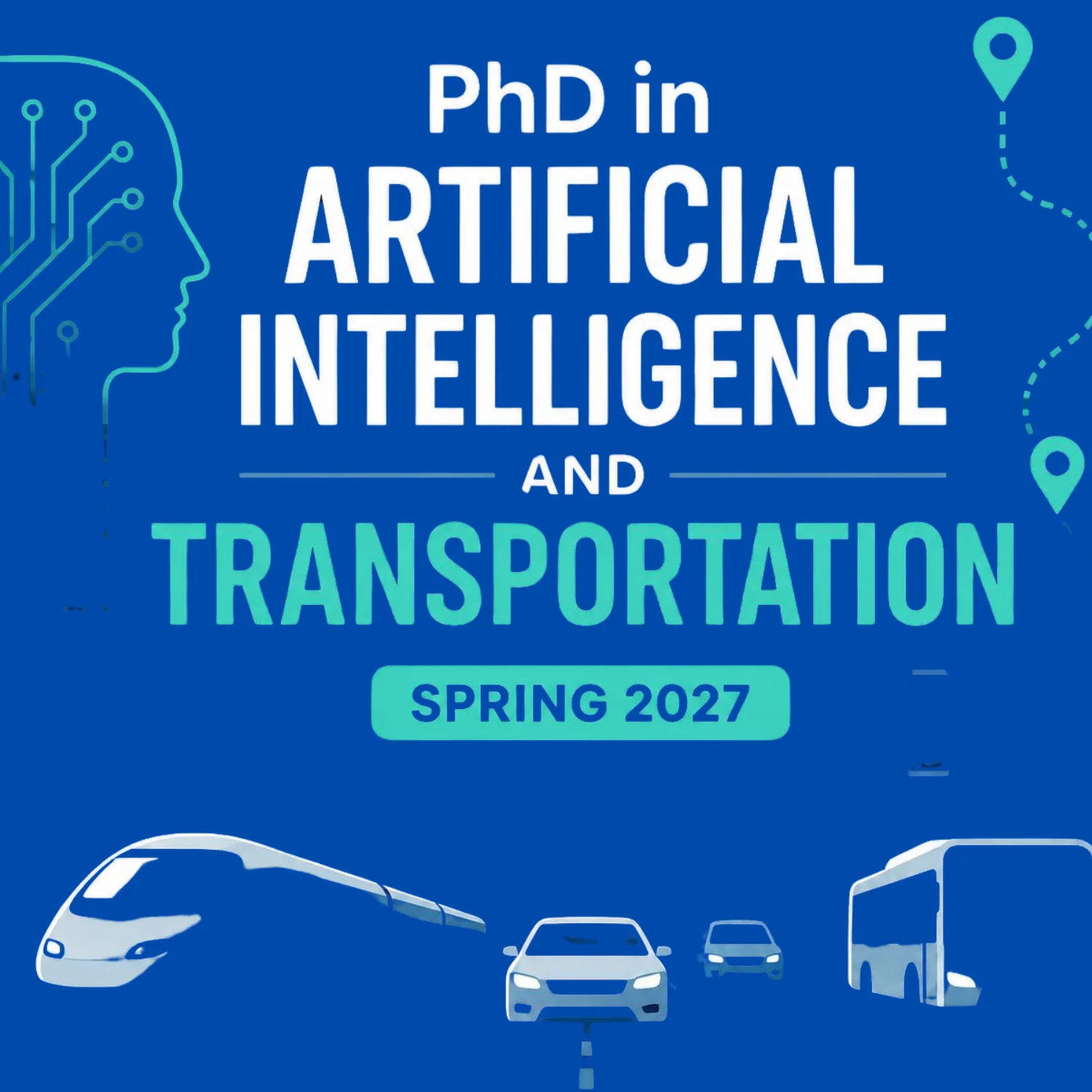
PhD in Artificial Intelligence and Transportation – Spring 2027
How to Apply for PhD in Power
Interested students should send a brief introductory email to Dr. Xingpeng Li at [email protected] with the subject line:
Prospective PhD Student—Spring 2027—[Your Name]—[Research Area]
This email must contain the following items:
- Updated Curriculum Vitae
- Academic transcripts
- Score reports for TOEFL, IELTS, Duolingo, or GRE tests, if any
- A short overview of research interests and how they relate to the work done in the RPG Lab
- Experience in coding, simulations, mathematical modeling, optimization, or machine learning
- Term of admission preference and availability
The content of the email should provide a brief introduction of the educational background and the technical skills of the applicant along with the motivation behind the intention of joining the RPG Lab.
Formal UH Application
This initial contact does not constitute the actual University of Houston graduate application process. This process involves submission of a curriculum vitae, statement of purpose, academic transcripts, and three letters of recommendation, along with applicable test scores.
In light of the departmental guidance at present, the GRE is optional but recommended for those seeking the PhD. The applicants who need to prove their English proficiency are encouraged to check out the current guidelines for the TOEFL, IELTS, and Duolingo tests.
The current published deadline for application to spring admission is October 15. All application materials are to be submitted by the deadline. Because admission requirements and deadlines may change, applicants should verify the latest information on the UH ECE Graduate Admission Procedures page before submitting an application.
Important Details
-
University: University of Houston
-
Department: Electrical and Computer Engineering
-
Research group: Renewable Power Grid Lab
-
Degree: PhD in Electrical Engineering
-
Preferred starting term: Spring 2027
-
Research location: Houston, Texas, USA
-
Faculty contact: Dr. Xingpeng Li
-
Email: [email protected]
-
Research website: https://rpglab.github.io/
-
Official admissions page: UH ECE Graduate Admission Procedures
Students who qualify and have a keen interest in improving the future power grids in terms of planning, operations, intelligence, reliability, stability, and resilience are strongly urged to get in touch.
Frequently Asked Questions
1. What PhD positions are available?
Positions for PhD students are open in the RPG lab, University of Houston, for admission to be done in 2027, preferably starting in spring 2027. The topic will be computational problems in power systems.
2. What research areas are available?
Possible research topics can be:
- Planning and operations of power system
- Applications of AI and ML in power and energy systems
- Grid connection of data centers
- Grid reliability, stability, and resiliency
- Microgrids and distributed energy sources
- Integration of renewable energy and energy storage
- Modeling and optimization of power systems
The Optimization Laboratory uses optimization, network theory, data science, and machine learning for bulk power systems and microgrids.
3. Who is eligible to apply?
The applicant is expected to hold, or be expected to receive, a BS or MS in electrical engineering, computer engineering, power engineering, applied mathematics, operations research, computer science, or any other highly related discipline. The University of Houston ECE admits doctoral candidates holding a BS or MS in electrical or computer engineering or any other highly related discipline.
4. Is a master’s degree required?
Not necessarily. Both a bachelor’s and master’s degree can be used for applying in a relevant area. Nevertheless, all applicants should have sufficient academic qualifications and research potential.
5. What technical experience is preferred?
Power systems, optimization techniques, AI, machine learning, data analytics, and numerical modeling experience is preferred. Prior exposure to languages such as Python, MATLAB, Julia, AMPL, Pyomo, Gurobi, CPLEX, PSS/E, PSCAD, PowerWorld, PyTorch, TensorFlow, and scikit-learn will be helpful but not necessarily required in all fields.
6. Is prior power-systems experience mandatory?
Necessarily not. Applicants whose background is in optimization, AI/ML, operations research, control, applied mathematics, or any other closely related field are welcome to apply if their research is well-aligned with power and energy systems.
7. What documents should be sent in the initial email?
Applicants interested in applying must include the following:
- A current CV
- Transcripts from all academic institutions attended
- TOEFL, IELTS, Duolingo, or GRE results, where applicable
- Research interests summary
- Experience in coding, simulations, optimization, modeling, or AI/ML
- Preferred start term
Use the email subject line: Prospective PhD Student—Spring 2027—[Your Name]—[Research Area].
8. Is the GRE required?
GRE is optional, although it is highly recommended that PhD applicants for the University of Houston Department of Electrical and Computer Engineering provide it.
9. Is an English-language test required?
For those who are required to prove their proficiency in the English language, they will be expected to meet the criteria as stated by the UH guidelines. As for the current ECE guidelines, the accepted tests include TOEFL, IELTS, and Duolingo.
10. Does emailing the professor constitute a formal application?
Not at all. The initial email is to help evaluate if your research interests match the lab’s; however, you must still submit a full application via the University of Houston’s graduate application portal.
11. What is the application deadline for the PhD in Power?
The currently published UH ECE deadline for spring admission is October 15. Because deadlines may change, applicants should check the official UH ECE admission procedures before applying.
12. Are the PhD in Power funded?
There is no information on funding. Research and teaching assistantships, tuition, and stipend arrangements can be inquired about at the time of application screening.
13. Can international students apply for the PhD in Power?
Yes. International applicants who meet the criteria are welcome to apply. They should meet the requirements of the University of Houston concerning international graduate students.
14. Can applicants from outside electrical engineering apply for the PhD in Power?
Yes. Individuals with a background in computer engineering, computer science, applied mathematics, operations research, control, optimization, data science, and other related fields will be considered if their expertise matches that of the research team.
15. Where can applicants learn more about the PhD in Power?
Applicants can explore the group’s research, publications, members, datasets, and open-source codes on the RPG Lab website. The team is headed by Dr. Xingpeng Li from the University of Houston Department of Electrical and Computer Engineering.









Leave a Reply