

Electrochemical materials, functionalized electrolysis, and scanning electrochemical microscopy (SECM) have openings for full scholarship-based PhD and post-doctorate positions in the Department of Materials Science and Engineering, University of Central Florida (UCF). This research group, headed by Professor Xin Chen, provides an exciting opportunity for working in sustainable energy, hydrogen, water, carbon, and resource recovery systems.
If you are excited about novel electrochemistry, innovative characterization techniques, and high-throughput experimentation, this could be just what you are looking for.
About the Chen Research Group and UCF MSE
The Chen Research Group is a newly established laboratory in the Department of Materials Science & Engineering in the College of Engineering and Computer Science at UCF. The group’s research interests include designing new functional materials, electrochemical interfaces, and electrochemical systems for applications related to addressing global challenges of sustainable energy, hydrogen generation, water purification, carbon cycling, and resource recovery.
As a member of a new research group, you will be able to influence the direction of your research as well as the development of the lab itself. MSE offers an exciting and nurturing research environment with state-of-the-art instruments and research activities that cover energy and materials science.
Overview of Electrochemical Materials Research Positions
There are two open positions at this time.
- The first one is for a PhD student position that is fully funded in the area of electrochemical materials and systems.
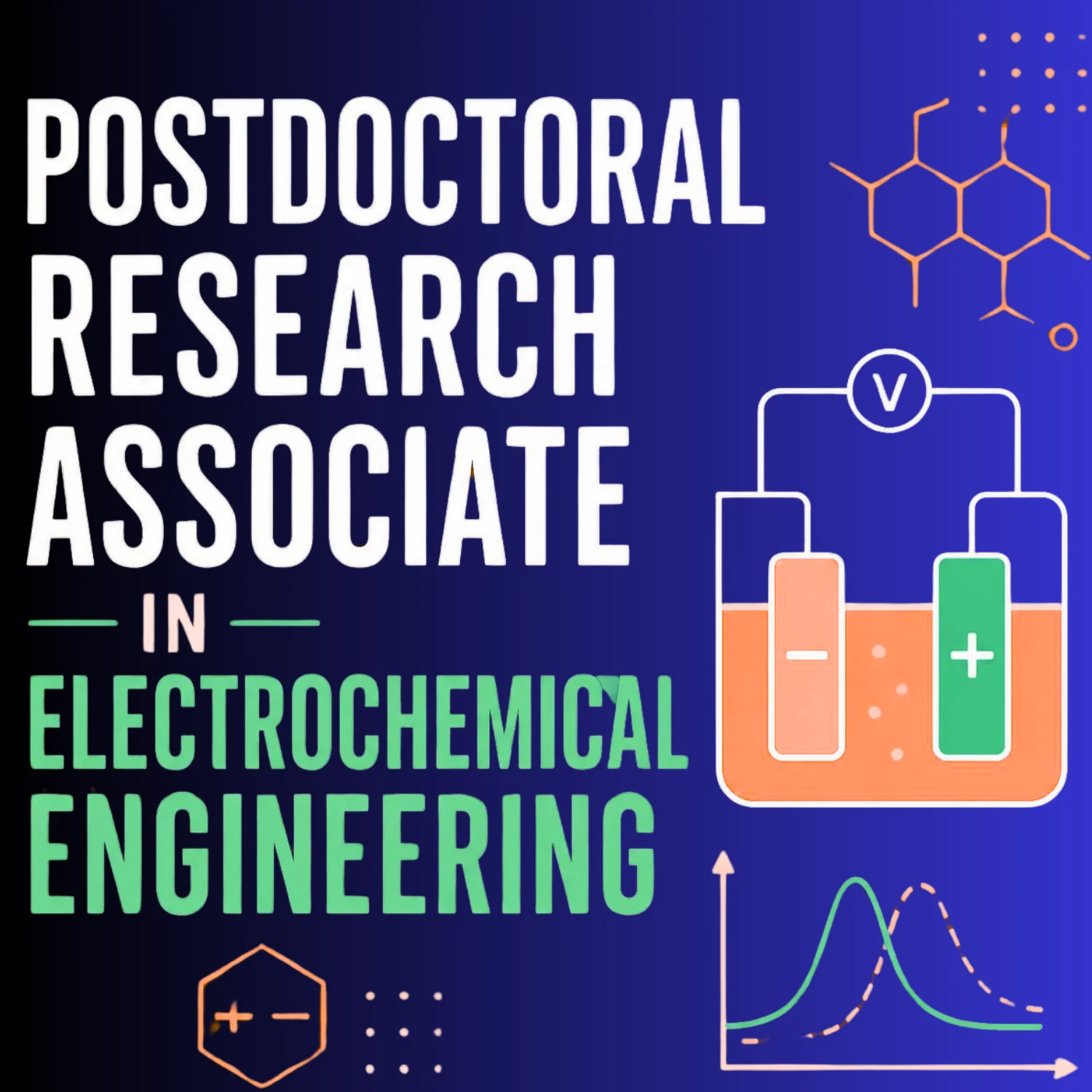
- The second position is for a postdoctoral researcher who will be working on electrode functionalization, SECM, and high-throughput electrochemical characterization.
These positions are fully funded; thus, the selected individuals will have funding while conducting their research.
Fully Funded PhD Position in Electrochemical Materials
Electrochemical Materials Research focus
The PhD scholarship opportunity revolves around researching and developing cutting-edge electrochemical materials and devices that contribute towards achieving sustainability goals in terms of energy generation, water purification, carbon sequestration, and resource recovery. Training in the area of materials preparation, electrode functionalization, electrochemical measurements, and material characterization techniques will be provided to the student.
The position offers an ideal platform for students looking to gain solid expertise in the entire process of materials development and electrochemical analysis.
Key Electrochemical Materials research areas
Some of the topics that the PhD project will deal with include the following:
- Development of new platinum-group-metal (PGM) and PGM-free materials for electrocatalysis.
- Development of functionalized electrolyzers for electrolysis, electrodialysis, and electrochemical separations.
- Engineering of interfaces to enhance electrocatalysis in terms of activity, selectivity, stability, and resistance to corrosion.
- Materials characterization and evaluation of electrochemical performance using conventional and state-of-the-art approaches.
- High-throughput electrochemical analysis, with scanning electrochemical microscopy (SECM) if needed for particular projects.
Based on your experience, you can focus on hydrogen evolution/reduction, oxygen reduction/evolution, ion separation, etc.
PhD Responsibilities for Electrochemical Materials
As a PhD student at the Chen Research Group, you will be required to:
- Synthesize materials and prepare electrodes in several electrochemical devices.
- Carry out electrochemical testing procedures, such as cyclic voltammetry (CV), linear sweep voltammetry (LSV), electrochemical impedance spectroscopy (EIS), chronoamperometry (CA), chronopotentiometry (CP), and stability test.
- Characterize synthesized materials via techniques like SEM, X-ray Diffraction (XRD), X-ray Photoelectron Spectroscopy (XPS), Raman Spectroscopy, FTIR Spectroscopy, etc.
- Evaluate your data, interpret results, and work on journal publications.
- Report your research activities in lab group meetings as well as in external seminars and conferences.
- Collaborate with others within and outside your lab group for joint research.
This mix of activities will ensure that by the time your PhD comes to an end, you have developed a well-rounded research portfolio.
PhD Qualifications and Preferred Background
Applicants who want to qualify for this PhD opportunity should hold a B.S. or M.S. degree in any of the disciplines listed below, or related fields:
- Materials science or materials engineering
- Chemistry
- Chemical engineering
- Electrochemistry
- Environmental engineering
- Mechanical engineering
Prospective students who possess skills or experience in materials science, chemistry, electrochemistry, and sustainable energy, water, and environmental technologies are encouraged to apply. The group is especially interested in attracting candidates with electrochemical testing experience, electrode fabrication capabilities, and/or materials characterization experience. However, motivated students who wish to learn are also welcome.
Fully Funded Postdoctoral Researcher Position
Research focus
The postdoctoral researcher in this fully funded position will be involved in the development of new materials for the functionalization of electrodes, electrolysis, electrodialysis, and electrochemical characterization using high-throughput techniques. Special consideration will be given to exploring applications in scanning electrochemical microscopy (SECM) to study electrochemical interfaces and material libraries.
This position is suitable for applicants who possess a background in electrochemistry and/or materials science and seek to enhance their knowledge through SECM and high-throughput methods, in addition to gaining management skills.
Key research areas
The postdoctoral fellow will work on some of the most advanced areas of science, including:
- Developing and applying high-throughput electrochemical analysis techniques using SECM techniques.
- Localized electrochemical examination of activity, selectivity, mass transport, corrosion resistance, and degradation kinetics.
- Creation of non-PGM materials that can be used for electrochemical electrodes.
- Functionalizing electrodes with catalysts, protective layers, selective ionic species, porous materials, and composite materials.
- Designing and optimizing electrochemical processes for salt water electrolysis, electrodialysis, ion separation, and material recovery.
The synergy between SECM and high-throughput analysis will enable the postdoc to explore many different materials and interfaces quickly and thoroughly.
Postdoc Responsibilities
The postdoctoral fellow will also be responsible for:
- Undertaking research projects on electrochemical materials and functionalized electrolyzers, starting from conception to publication.
- Applying SECM techniques to study electrochemical interfaces and materials libraries in order to optimize and develop these techniques.
- Discovering novel applications of SECM in electrochemistry, electrodialysis, corrosion, ion transport, separation, and electrode degradation studies.
- Preparation and characterization of functional electrode materials.
- Carrying out electrochemical experiments, including cyclic voltammetry, linear sweep voltammetry, electrochemical impedance spectroscopy, and anodic stripping voltammetry.
- Supervising undergraduate and graduate students working in the lab.
- Preparing scientific papers, presenting results at conferences, and participating in proposal writing.
This job opportunity is a great experience for those planning to work in academia or industrial R&D in the future.
Postdoc Qualifications and Preferred Experience
The applicants for the position must have a doctoral degree in one of the following fields:
- Materials science
- Chemistry
- Chemical engineering
- Electrochemistry
- Environmental engineering
- Mechanical engineering
- Or a similar discipline.
Desirable expertise in one or several of the following domains is required:
- SECM and other scanning probe techniques
- Materials chemistry and electrode modification
- Electrochemical analysis and sophisticated characterization
- High-throughput electrochemical analysis
- Electrolysis and electrodialysis
- Corrosion or electrochemical separations
- Machine learning and autonomous optimization in electrochemical setups.
Those candidates who are able to relate electrochemistry and automation/data analysis approaches will be favored.
Infrastructure Risk & Community Resilience PhD position (Funded)
Application Materials and How to Apply
All eligible applicants (both PhD and postdoc applicants) need to have the following documents prepared:
- Cover letter indicating your areas of interest and experiences in those areas.
- Curriculum vitae (CV) detailing your educational background, research experience, skills, and published papers.
- Names and contact information for 2-3 references (usually academic mentors/supervisors).
- Any published papers that you may wish to highlight.
- Unofficial transcripts, if possible, especially for PhD applicants.
All completed applications need to be emailed to Prof. Xin Chen at [email protected]. It is recommended to compile all the documents into one PDF file and label your emails with a subject heading like “Application for PhD position – [your name]” or “Application for Postdoc position – [your name].”
How to Tailor Your Application for Electrochemical Materials
For best results in securing an interview, take into consideration the following when creating your application package:
- Tailor your cover letter to the area of the group’s interests. Explain your previous experience in relation to electrochemical materials, electrolyzers, SECM, or any of the fields mentioned above.
- Highlight the techniques that have been mentioned specifically in the advertisement. Be sure to mention any experience in CV, EIS, LSV, or SECM, as well as materials characterization techniques such as SEM, XRD, XPS, Raman, or FTIR.
- Demonstrate interest in sustainability and environmental technologies since it is one of the core areas of the research group.
- For postdoc applications, emphasize independence and leadership roles. Provide examples of independent project management, student mentoring, or manuscript/proposal writing.
- For PhD students, emphasize motivation and readiness to learn. If there is no experience in certain techniques, be sure to discuss the related knowledge that you possess.
Why is Electrochemical Materials Research Attractive
Such roles offer a unique opportunity that includes generous funding, advanced research subjects, and the possibility of working within a recently founded team. The applicant will be able to:
- Engage in interdisciplinary work, combining materials science and electrochemistry as applied to sustainable systems.
- Obtain practical training in high-throughput electrochemistry and SECM techniques, which are gaining more importance in current electrochemistry and materials development.
- Publish extensively and network professionally by collaborating on projects, attending meetings, and writing proposals.
Such opportunities for highly motivated candidates exist in the Chen Research Group at UCF.
Electrochemical Materials Research FAQs
1. Is funding available for all these positions?
Yes, both the PhD position and the postdoctoral researcher position seem to be fully funded because the research will be funded.
2. Which academic background is desired by the PhD program?
Those having a degree in materials science, chemistry, chemical engineering, electrochemistry, environmental engineering, mechanical engineering, or closely related areas are encouraged to apply for this PhD position with an interest in sustainable energy, water, and environment.
3. Is SECM experience necessary for post-doctorate position?
A prior experience of SECM would be highly appreciated; however, candidates having a solid background in electrochemistry/materials characterization and learning SECM quickly would be considered as well.
4. Can final year students also apply for the PhD position?
Yes, the ad specifies that the applicant has already earned or is about to earn a B.S. or M.S. degree.
5. How many references are expected in your CV/resume?
At least two to three references should be listed.
6. To whom do I address the application material?
Please email all documents to Prof. Xin Chen at [email protected].


Leave a Reply